Decades ago, my boss told me this as a compliment. When I did research for this post, I found out the phrase is also pregnant with political meaning.
As part of Mussolini’s rise to power, he took control of Italy’s large-scale public works projects which included rebuilding the railroads after WW1. As Prime Minister, he took over day-to-day decision-making for their operations. The phrase “He Makes the Trains Run on Time” was used by both supporters and detractors. Supporters justified his iron-fisted rule by noting that the trains were running efficiently. For detractors, it was a jab at rampant government corruption and the widespread poverty of Italian citizens, but at least, “the trains were running on time.”
This post has no political agenda. Instead, it’s a simple observation of a recent event. We bought a car from a dealership 150 miles from our home. My wife and I were going to drive down and pick it up. My wife got sick and wasn’t able to go. I scrambled to find a way to get to the dealership. A quick Google search revealed that I could take the train from my city to the city where the car was located for $34. I quickly booked a ticket online.
I hadn’t ridden a passenger train (excluding amusement parks) for over 50 years. I had no idea what the experience would be. The three hour ride was loaded with lessons.
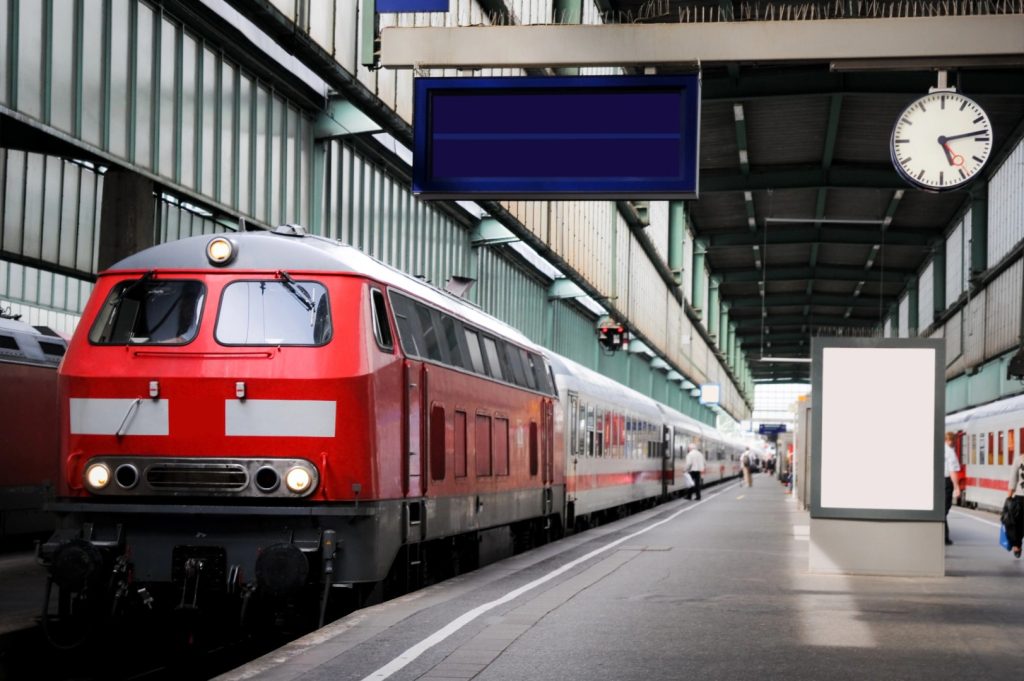
Functional always beats flashy. When I arrived at the train station, there was a clean, comfortable seating area. There was good signage that told me where to go and what to do. We boarded the train at the scheduled time, departed at the scheduled time, made the five stops between my departure point and final destination at the scheduled time, and arrived at my final destination at the scheduled time. Amtrak perfectly nailed the most important deliverable in the transaction. There was no hoopla around any of this – just cool efficiency.
Make things as simple as possible, but no simpler. I was struck by the stark differences among the seven train stations I saw that day. The train station I departed from was big. It serviced multiple parallel tracks, was staffed by several employees, and had infrastructure to handle more complex transportation transactions. The other stations I saw that day were tailored to the needs of that stop. Some were big enough to house a waiting area and restrooms. Some were unmanned and no bigger than a garden shed.
Connecting with customers makes all the difference. I interacted with two Amtrak employees that day. At my departure point, I had a question about the ticket I had purchased online and talked with a young woman at the ticket counter. She seemed genuinely glad I had chosen Amtrak for my transportation needs. She cheerfully answered my question and affirmed, in my mind, my decision to take the train. The other employee was the conductor on the train that checked my ticket. I was pretty sure that someone forced her to come to work at gunpoint. As I watched her work her way through the passenger car, interacting with each customer seemed like a burden – a necessary evil on the way to getting a paycheck.
Your customers are the intersection of a shared problem to solve. I was struck by the diversity of the passengers on the train. Before I settled in and stuck earbuds in my ears, I overheard some very different conversations. Two rows in front of me, two men were talking. One was just released from prison and was on his way to a halfway house in a western city. It just so happened that the other man was sent to the same halfway house when he was released from prison years earlier. Two rows in front of them was a family taking a vacation trip. The three children in the family were up and about in the passenger car the entire time I was on the train. The common denominator – a trip to be taken from A to B on a schedule and at a price that worked for the travelers.
Promises kept are more important than promises made. When I booked the trip, I was pretty excited about onboard Wi-Fi and a power outlet at each seat. Since the trip was three hours, I saw a golden opportunity get some work done. Sure enough, when I boarded, the train was clean and, as promised, there was Wi-Fi and a power outlet at each seat.
Work hard so your customer doesn’t have to. As I was pondering the trip, I was struck by the level of complexity involved in what I experienced that day. Hundreds of miles of track, stations of varying magnitude, sharing the infrastructure with commercial customers who are trying to bring products to market, scores of employees engaged in customer-facing roles, maintenance, scheduling, sales, operations, and many other disciplines. However, in that brief three hour experience, all I had to do was step on the train, find a seat, connect to the Wi-Fi and wait until in reached my final destination. The complexity was borne by thousands of others that I’ll most likely never see.
You’ve most likely connected the dots yourself, but I want to connect a few myself.
- No matter how fancy your delivery is, if you fail to expertly deliver the baseline good or service your customer purchased, you’ve failed. No amount of flash will save you.
- Right-size infrastructure. Expertly build production capabilities that are efficient, scalable, and appropriate. Avoid the gold-plating unless it’s required for delivering the brand promise. No ego-driven purchases allowed.
- Create a culture of customer care. Hire and train people who can create positive customer interactions.
- Even if you’ve developed a very specific customer persona, those people are not homogenous. Your marketing and communications must speak to the problem that you solve and your effectiveness at solving it. You don’t know all the nuances of each customer’s life, but you know they share a need that you meet. Talk about the problem, talk about the solution. All the rest is white noise.
- Onboarding sets the stage for promise-keeping. Good customer onboarding starts with the first interaction in the sales process. Everything you say to lure the customer in is a promise to be kept during the delivery of the product or service. Deliver every single one of them.
- Customers don’t care about your problems, they care about theirs. As business leaders, we occasionally solve an operational problem by making it easier for us but more difficult for the customer to do business with us – don’t. Absorb all the complexity inside the organization so the customer’s experience is frictionless. Don’t make them feel like they need a vacation after doing business with you.